
Topic
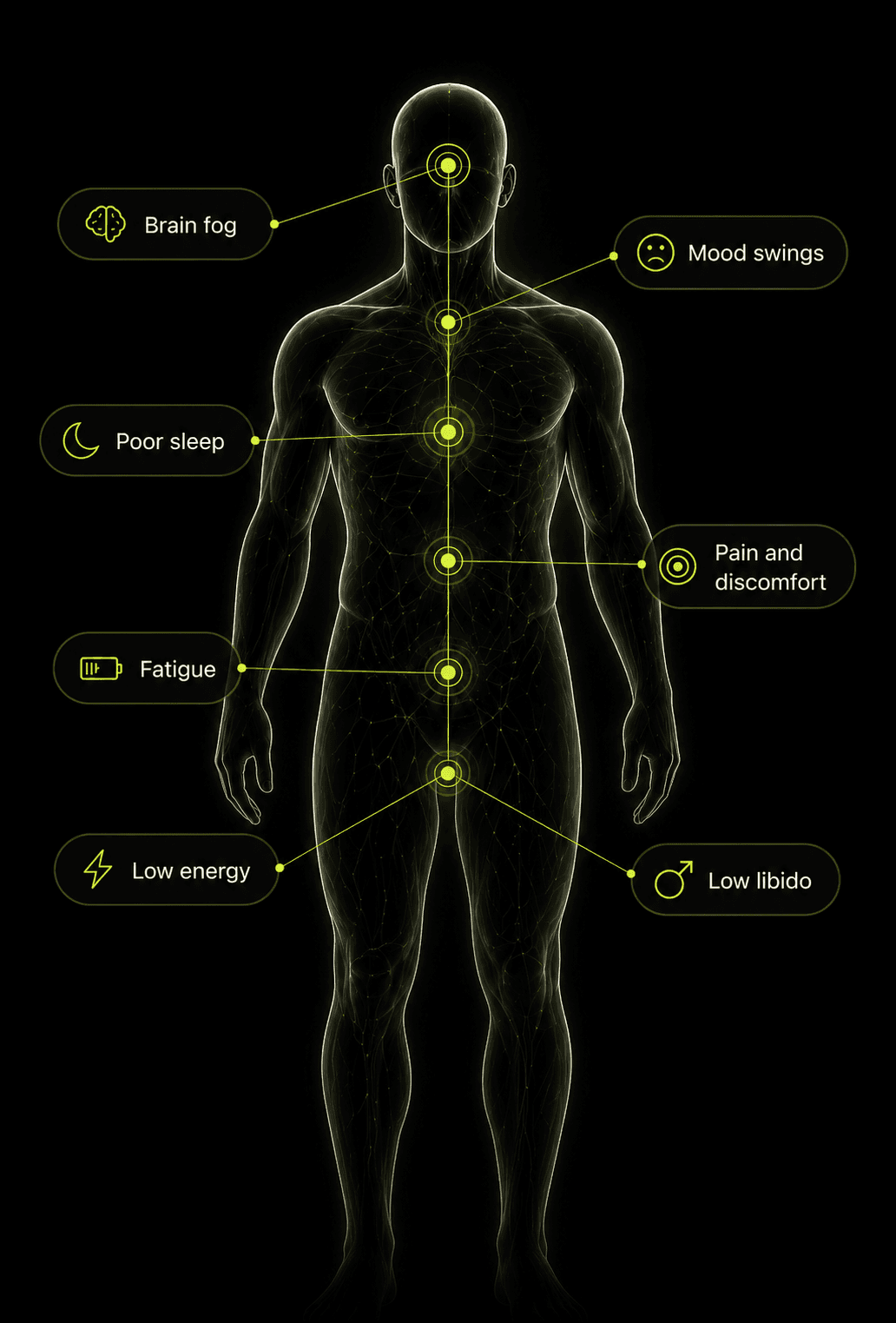
Performance pathways — why order matters
Symptoms cluster downstream. Repair sequence follows upstream logic — the same discipline Re:Formd encodes in pathways and protocols.
Explainer
Framework note
Pathways are the sequencing contract: intake captures context and inputs, Body Signals characterize what you feel, entities inventory what touches the system—then reasoning and protocols sit on top. Shuffle that stack and you optimize noise.
Explanation
Downstream symptoms (fatigue, mood drag, performance collapse) share surface area with many upstream drivers. Pathways force the question: what has to be stable or known first before a given lever is even interpretable—sleep and load context, substance load, signal clarity, then targeted work.
Importance
“Fix everything at once” feels decisive. In practice it destroys attribution: you cannot tell which change moved the needle, and contraindicated combinations hide in plain sight. The app’s order is not gatekeeping—it is epistemic hygiene.
Connections
You now have the map the product is ordered around. Join the waitlist to be first in when Re:Formd ships.
Misconceptions
Reframe: Skipping steps does not save time; it borrows against confidence. You get brittle recommendations and false certainty. Order is how the system stays honest about what it knows.
Continue in the system
Health Discovery is where Re:Formd starts. The book supports belief; the waitlist is for launch updates only.